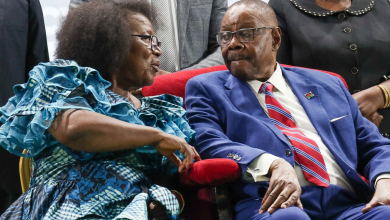
There are moments when a nation does more than introduce a policy or announce a programme. It declares who it wants to become. Malawi did that this week with the introduction of the Chief Kachindamoto Fund (CKF) to the African Union at the 4th Africa Girls Summit.
For years, the late Senior Chief Theresa Kachindamoto stood as a towering force against child marriage. She embodied the courage many of us wish we had: the courage to say no, loudly and consistently, to a practice so deeply woven into community norms that most feared even questioning it. She annulled over 3 500 child marriages and insisted that every girl be returned to school. She showed the world that tradition, when wielded for justice, can be a tool for empowerment.
At the Girls Summit, when feminist traditional leader Fumukazi Zilanie Kamgundanga stepped before African Union delegates and said “The silence after a leader like our Queen falls can be dangerous,” she was naming a fear many share quietly: that the progress we have made can be undone the moment we look away. When a figure like Kachindamoto passes, the vacuum can so easily be filled by the very practices she fought to dismantle.
But then came the answer. Malawi was not choosing silence. Malawi was choosing to institutionalise her fight. The CKF is not just a tribute, it is a continuation of her strategy, scaled up and sharpened.
And the timing could not be more symbolic. Introduced during the 16 Days of Activism Against Gender-Based Violence, the Fund plants a flag: ending child marriage is not a side issue. It is a core fight in the struggle to protect girls from violence, exploitation and lost futures.
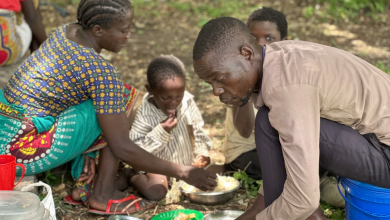
What excites me most is that the CKF understands the actual barriers girls face. Yes, school fees matter, but so do uniforms, transport, books, and even childcare for young mothers trying to reclaim their education. By covering these costs, the fund acknowledges something powerful: girls do not drop out because they lack motivation; they drop out because systems fail them.
Supported by the Royal Norwegian Embassy, Iceland, UN Women Malawi, UNFPA, Unicef, and Plan International, the Fund aims to support 5 000 girls to stay in or return to school, thereby not only giving the girls the gift of choice, but also reopening their futures.
But perhaps the most transformative component is the second pillar that aims to incentivise chiefs to drive cultural change. Kamgundanga put it beautifully: “A chief is a living bridge between our cultural wisdom and the progressive promise of human rights.” Kachindamoto proved this. Chiefs shape norms and behaviour, and they also move communities.
By formalising this leadership, Malawi is essentially scaling up the Kachindamoto model—one that is equal parts protective, punitive, and empowering. If the AU were to embrace this approach continent-wide, as Kamgundanga urged, we could see an Africa where zero child marriage zones are not aspirational, but standard.
The government presentation, delivered by the Principal Secretary for the Ministry of Gender, was a necessary grounding. She rightly celebrated Malawi as a rising star in child protection, but she did not shy away from the uncomfortable truth, that 38 percent of girls are still married before the age of 18, and 9 percent before 15. Our adolescent birth rate remains one of the highest in the region.
These numbers are not mere data points. They represent stolen girlhoods and truncated dreams. They remind us that policies alone are not enough, the work must reach every village, every household, every chief’s court.
The new National Strategy on Ending Child Marriage (2024-30), shaped through an inclusive national task force, carries Kachindamoto’s imprint of community bylaws, chiefs’ councils, social mobilisation and sharp accountability. This is the right direction.
From where I stand, the launch of the Chief Kachindamoto Fund is not just Malawi honouring a legend, it is a call to action for all of us. Ending child marriage requires government leadership, yes. It requires chiefs, yes. But it also requires communities, parents, teachers, faith leaders, and every citizen who believes girls deserve the fullness of childhood.
Kachindamoto taught us that tradition can be bent toward justice. Now Malawi has shown that her legacy can be built into policy, funding and continental vision.
The torch has been lit. The question is whether we will carry it together until every girl in Malawi, and every girl in Africa, grows up free, educated and empowered.